
If you run an ecommerce business, you already know this: selling online is the easy part.
What actually determines whether you grow profitably is how well your ecommerce supply chain holds up once orders start increasing.
In the early days, most ecommerce teams make things work with a mix of tools and manual effort. Orders flow in, someone checks inventory, fulfillment happens, and packages go out. It’s not perfect, but it works well enough.
Then volume grows.
Suddenly, delays become more frequent. Inventory numbers don’t match reality. Customers ask for updates you can’t answer confidently. Operations teams spend their day reacting instead of planning how to manage day-to-day operations without chaos.
At that point, the ecommerce supply chain stops being a background process and becomes the biggest growth constraint.
This is exactly where many ecommerce brands stall.
Why the Ecommerce Supply Chain Breaks as You Scale
Most ecommerce supply chains don’t fail because teams don’t care. They fail because they were never designed to scale.
As businesses grow, the supply chain becomes fragmented. Orders live in one system. Inventory is tracked elsewhere. Fulfillment happens in another place. Delivery updates sit with carriers or drivers. Each handoff adds friction.
When everything is disconnected, even small issues ripple across the operation. A late inbound shipment throws off inventory. Inventory issues delay fulfillment. Delayed fulfillment breaks delivery promises. Customer support ends up dealing with the fallout.
At this stage, delivery execution becomes one of the hardest parts to control, especially when teams rely on manual coordination and after-the-fact updates.
What an Ecommerce Supply Chain Really Includes
Many people think of the ecommerce supply chain as warehousing and shipping. In reality, it includes every step required to turn an order into a successful delivery.
A functioning ecommerce supply chain connects:
- Order intake from storefronts and marketplaces
- Inventory availability across locations
- Fulfillment execution (picking, packing, staging)
- Dispatch and delivery coordination
- Delivery confirmation and customer communication
When these pieces don’t talk to each other, execution slows down. When they do, operations become predictable.
The difference isn’t more software. It’s better coordination.
The Real Cost of Poor Supply Chain Visibility
One of the biggest problems in ecommerce operations is lack of visibility.
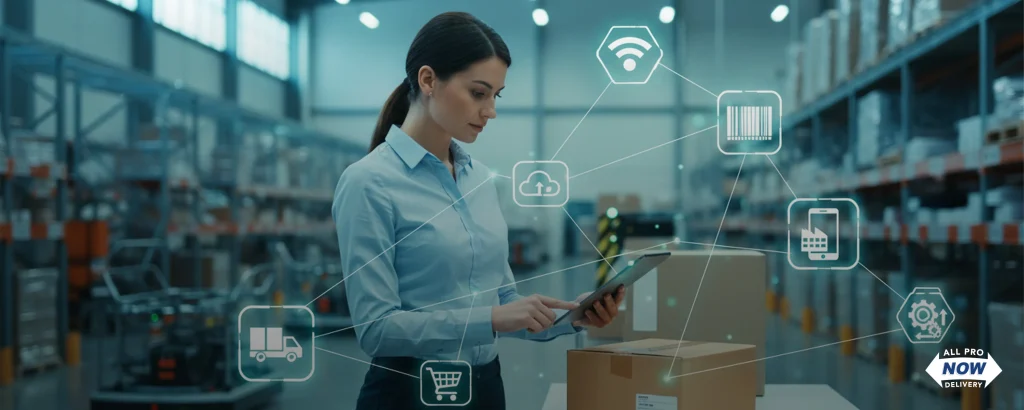
Teams don’t know which orders are stuck, which deliveries are delayed, or which inventory is actually available right now. Decisions are made based on yesterday’s data or assumptions.
This leads to avoidable problems:
- Orders get prioritized incorrectly
- Drivers waste time waiting for instructions
- Customers receive vague or delayed updates
- Managers can’t spot issues until they escalate
A strong ecommerce supply chain gives teams visibility while work is happening, not after the day is over. That visibility is what allows fast, confident decisions.
Why Manual Workarounds Don’t Scale
Manual processes are usually the first thing ecommerce teams rely on. A spreadsheet here. A message there. A quick call to confirm a delivery.
As volume grows, these workarounds become a liability.
Operations teams spend hours reconciling information. Fulfillment teams redo work because priorities change late. Customer support handles questions that shouldn’t exist in the first place. Leadership struggles to understand where time and money are actually going.
In an ecommerce supply chain, manual effort grows faster than revenue. Every workaround introduces risk. Every extra handoff creates delay.
Execution Is Where Ecommerce Supply Chains Win or Lose
Planning matters, but execution is where things either hold together or fall apart.
Execution-focused ecommerce operations don’t rely on people chasing updates. They rely on systems that reflect what’s actually happening on the ground.
Orders move through fulfillment. Fulfillment turns into deliveries. Deliveries update automatically. Everyone sees the same information.
This kind of execution-focused ecommerce supply chain helps businesses:
- Reduce missed deliveries
- Improve on-time performance
- Cut unnecessary communication
- Handle more orders without adding chaos
It’s not about perfection. It’s about consistency.
Where Delivery and Dispatch Become Critical
As ecommerce businesses expand into faster shipping, local delivery, or scheduled drops, dispatch becomes a critical part of the supply chain.
Orders don’t just need to be shipped. They need to be assigned, routed, tracked, and confirmed. When dispatch is handled manually, delays multiply.
This is where many ecommerce supply chains break. Fulfillment might be efficient, but delivery execution isn’t.
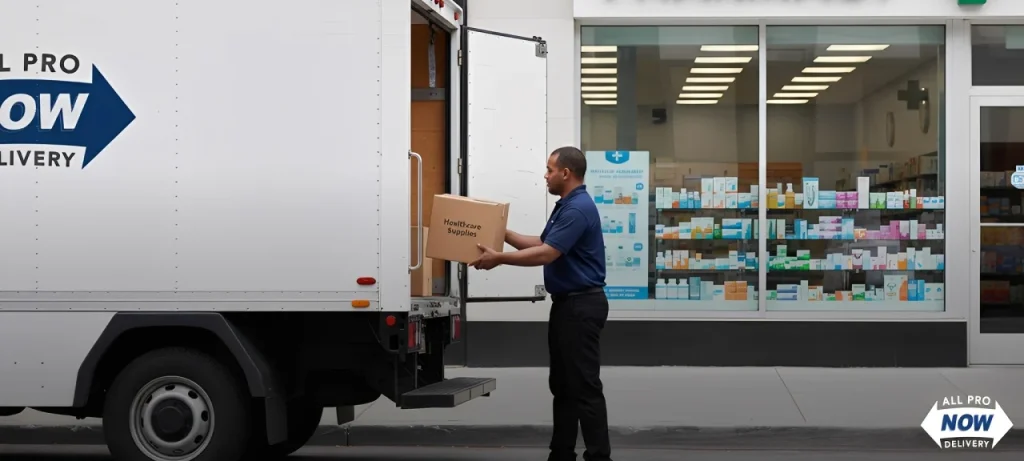
Without a structured way to manage jobs, drivers, and routes, ecommerce teams lose control in the last mile.
How AllProNow Strengthens the Ecommerce Supply Chain
This is where AllProNow fits naturally into ecommerce operations.

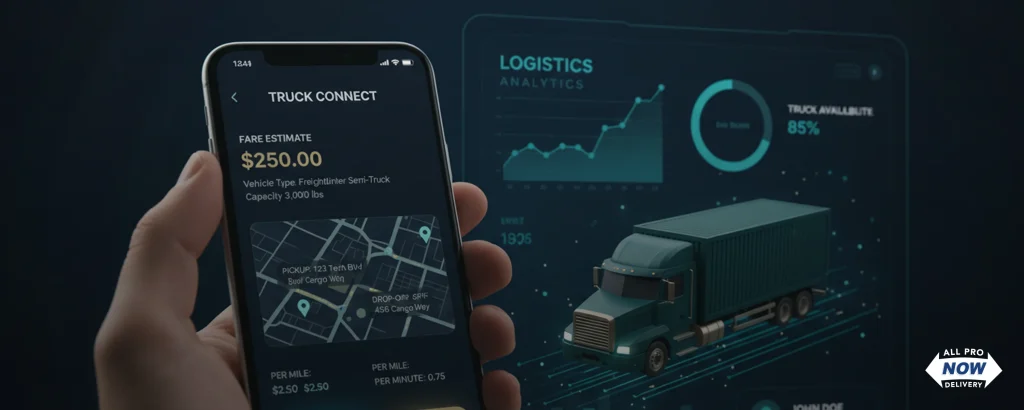
AllProNow helps ecommerce businesses bring structure to execution, especially when fulfillment and delivery are involved. Orders can be converted into jobs. Jobs can be assigned and routed. Delivery execution becomes visible in real time.
Instead of juggling multiple tools, teams manage dispatch, workforce coordination, job tracking, and delivery visibility in one operational flow.
For ecommerce brands handling local deliveries, multi-stop routes, or time-sensitive orders, this layer of control makes a real difference. Teams stop reacting and start managing.
AllProNow doesn’t replace your ecommerce platform. It strengthens the part of the ecommerce supply chain where most breakdowns happen: execution.
Why This Matters for Customer Experience
Customers don’t see your supply chain. They feel it.
Late deliveries, missing updates, and unclear communication damage trust quickly. On the other hand, predictable delivery and clear updates build confidence.
A well-run ecommerce supply chain supports customer experience by keeping promises. Orders ship when expected. Delays are communicated early. Delivery confirmation is accurate.
That reliability is what keeps customers coming back.
Scaling the Ecommerce Supply Chain Without Burning Out Teams
Growth shouldn’t mean longer days and constant firefighting.
Ecommerce businesses that scale successfully invest in clarity. They make it easy for teams to see what’s happening, what’s next, and where attention is needed.
A connected ecommerce supply chain allows businesses to grow without adding unnecessary operational burden. Teams spend less time chasing information and more time improving outcomes.
Turning Daily Execution Into Long-Term Advantage
Over time, a strong ecommerce supply chain produces insight. Teams can see which routes perform best, where delays occur, and how resources are being used.
These insights help leaders make better decisions about inventory placement, delivery strategy, and expansion plans. Instead of guessing, they act based on real execution data.
This is when the ecommerce supply chain stops being a cost center and becomes a competitive advantage.