
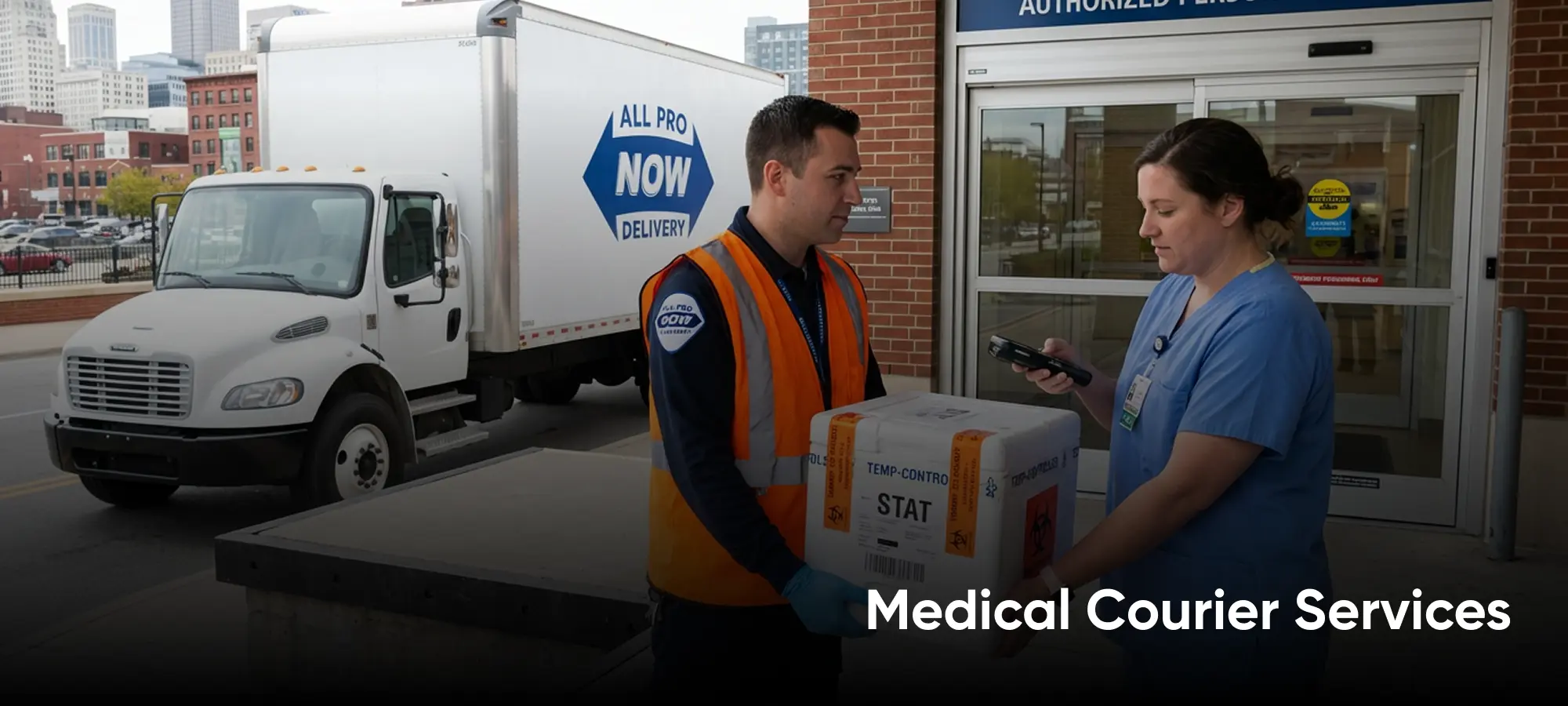
When a laboratory needs a blood sample delivered within the hour, or a hospital pharmacy requires an emergency medication transfer, the stakes are high. Medical courier services bridge the gap between healthcare facilities and the critical materials they need to treat patients. AllProNow provides fast, reliable, and compliant healthcare delivery solutions across Northeast Ohio, Columbus, Toledo, Detroit, Akron/Canton, Youngstown, Pittsburgh, Indiana, Michigan, Western Pennsylvania, Northern Kentucky, and Florida.
This guide explains how medical courier services work, what healthcare facilities should expect, and why choosing the right provider matters for patient outcomes.
What Are Medical Courier Services and Who Needs Them?
Medical courier services specialize in transporting healthcare materials that require careful handling, strict compliance, and time-sensitive delivery. Unlike standard delivery services, medical couriers understand regulatory requirements and maintain chain-of-custody protocols throughout every shipment.
Healthcare facilities that rely on these services include hospitals, diagnostic laboratories, physician offices, urgent care centers, research facilities, blood banks, pharmacies, and veterinary clinics. Each facility type has unique delivery requirements based on what they ship and receive daily.
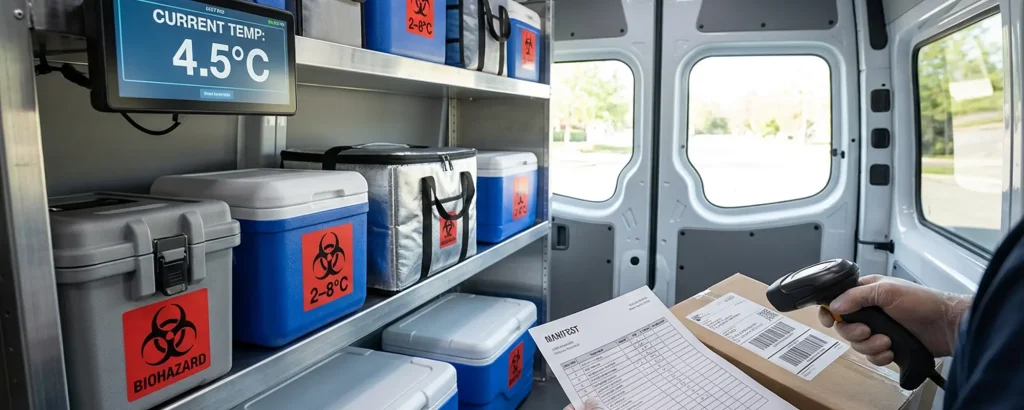
The types of materials transported span a wide range. Lab specimens include blood draws, urine samples, tissue biopsies, and swabs for diagnostic testing. Pharmaceutical products require secure handling, including prescription medications, vaccines, and controlled substances. Medical equipment covers everything from surgical instruments to portable diagnostic devices.
In cities like Cleveland, Detroit, and Pittsburgh, healthcare networks often span dozens of facilities across metropolitan areas. A regional hospital system might operate emergency departments, outpatient clinics, and specialized testing centers that all need to exchange materials quickly. Efficient courier service keeps these networks functioning as unified systems.
How Medical Courier Services Maintain Specimen Integrity
Specimen integrity determines whether test results are accurate. A blood sample that arrives at the wrong temperature or gets delayed in transit can yield unusable results, forcing patients to repeat tests and delaying diagnoses.
Temperature control is the most critical factor for many medical shipments. Some blood tests need samples maintained at room temperature, while others require refrigeration between 2-8°C. Certain biologics must remain frozen throughout transport. Experienced medical couriers use calibrated coolers, gel packs, and monitoring devices to maintain appropriate conditions.
Chain-of-custody documentation tracks who handles materials at every stage. When a courier picks up specimens from a collection site in Toledo and delivers them to a testing lab in Columbus, documentation should show pickup time, handler identification, transport conditions, and delivery confirmation.
Packaging standards vary based on content. Lab specimens often travel in leak-proof primary containers inside absorbent secondary packaging within rigid outer containers. This triple-containment approach protects both the specimen and anyone who handles the package.
Time limits add another layer of complexity. Certain tests require specimens to reach the laboratory within specific windows. A coagulation panel might need processing within four hours of collection. Couriers must understand these constraints and plan routes accordingly.
HIPAA Compliance: What Healthcare Facilities Must Verify
The Health Insurance Portability and Accountability Act sets national standards for protecting patient information. Any courier handling protected health information must comply with these requirements.
Healthcare facilities bear responsibility for ensuring their courier partners maintain compliance. Before contracting with a delivery service, administrators should verify several key elements.
Business Associate Agreements establish legal obligations between healthcare entities and their service providers. Couriers handling PHI should execute these agreements and understand their responsibilities.
Driver training programs should cover HIPAA fundamentals, including what constitutes protected information and how to prevent unauthorized access or disclosure. Training should be documented and refreshed annually.
Security protocols during transport prevent breaches. Vehicles should remain locked when unattended. Documents should never be left visible through windows. Electronic communications should avoid including identifiable patient information in unsecured formats.
Medical couriers serving facilities in Ohio, Michigan, Pennsylvania, and Florida must understand that HIPAA requirements are federal. Penalties for violations can reach $50,000 per incident.
Same-Day Delivery Options: When Hours and Minutes Matter
Not every medical delivery is an emergency, but some absolutely are. Understanding the difference between routine, priority, and STAT deliveries helps healthcare facilities communicate their needs clearly.
Routine scheduled deliveries follow predictable patterns. A physician’s office might have daily specimen pickups at 4 PM, with delivery to the laboratory by 6 PM. These predictable routes allow efficient planning and competitive pricing.
Priority deliveries need faster turnaround than routine schedules allow but aren’t immediate emergencies. A clinic might need medication delivered within four hours rather than overnight.
STAT deliveries represent true emergencies where patient care depends on immediate transport. A hospital in Akron might need a specific blood type delivered from Cleveland within 90 minutes for a trauma patient. These deliveries command premium pricing.
AllProNow offers same-day delivery options across its service territory, with transparent pricing that accounts for distance, urgency, and vehicle requirements. Their fleet includes sprinter vans capable of handling up to 3,600 pounds and box trucks for larger loads up to 10,000 pounds.
Real-time tracking gives healthcare facilities visibility into delivery status. Staff can check precise location and estimated arrival time through online dashboards or mobile applications.
Regional Coverage: Serving Midwest and Florida Healthcare Networks
Geographic coverage determines which facilities a courier can serve effectively. Healthcare systems operating across multiple states need partners with matching geographic reach.
AllProNow’s service territory covers substantial portions of the Midwest and extends to Florida. In Ohio, service extends throughout the Cleveland metropolitan area, Columbus, Toledo, Akron, Canton, and Youngstown. Michigan coverage includes Detroit and surrounding Wayne County communities. Pennsylvania service focuses on Pittsburgh and Western Pennsylvania. Northern Kentucky and portions of Indiana fall within the delivery network. Florida coverage addresses healthcare facilities throughout the state.
This geographic scope matters for healthcare systems managing complex logistics. A diagnostic laboratory processing specimens from dozens of collection sites needs a courier partner who can reliably serve all those locations without requiring multiple provider relationships.
Understanding local traffic patterns and optimal routing improves delivery efficiency. Drivers familiar with the Youngstown area know which routes to avoid during shift changes. Detroit couriers understand which hospital entrances to use for fastest specimen drop-off.
What to Look for When Choosing Medical Courier Services
Selecting a medical courier partner involves evaluating capabilities beyond basic transportation.
Compliance credentials include HIPAA training documentation, OSHA certifications for handling biohazardous materials, and state-specific licensing requirements. Request copies of current certifications rather than accepting verbal assurances.
Vehicle capabilities should match your shipment requirements. Temperature-controlled vehicles are essential for certain medications and specimens.
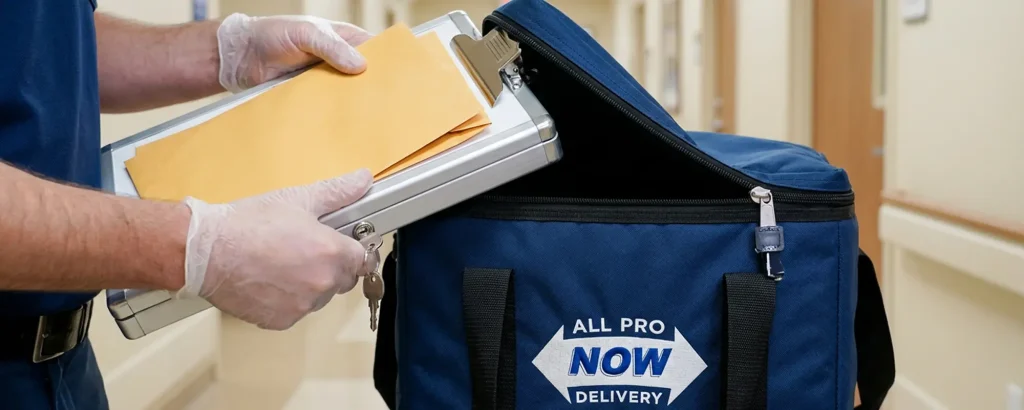
Technology infrastructure supports visibility and accountability. Modern courier operations provide real-time tracking, electronic proof of delivery, and digital chain-of-custody documentation.
Responsiveness indicates service quality. Medical emergencies don’t follow business schedules, so courier availability should match healthcare operational hours. AllProNow offers 24/7 customer support.
References from existing healthcare clients provide insight into actual performance. Ask prospective providers for contacts at facilities similar to yours.
Pricing transparency prevents budget surprises. AllProNow offers transparent pricing with no hidden fees, allowing healthcare facilities to budget accurately.
How Medical Couriers Support Different Healthcare Specialties
Different medical specialties have distinct courier requirements based on what they ship and their operational patterns.
Laboratory medicine depends heavily on specimen transport. Reference laboratories processing samples from hundreds of collection sites need high-volume, time-sensitive courier networks.
Hospital pharmacies use courier services for medication transfers between facilities, prescription deliveries to homebound patients, and emergency supply shipments. Controlled substance transport requires additional security protocols.
Blood banks coordinate with courier services for emergency blood product deliveries. When a hospital’s blood supply runs low or a patient needs a rare blood type, couriers provide the connection between blood centers and transfusion facilities.
Clinical research organizations use medical couriers for clinical trial material distribution and specimen collection. Protocol compliance requirements add complexity to these shipments.
Common Challenges and How to Avoid Them
Even experienced healthcare facilities encounter delivery challenges. Understanding common problems helps organizations prepare solutions.
Specimen rejection due to transport issues wastes resources and delays patient care. Prevention requires clear communication between collection sites, courier services, and receiving laboratories about acceptable parameters.
Documentation gaps create compliance vulnerabilities. Electronic documentation systems reduce these gaps by automatically recording pickup, transport, and delivery events with timestamps.
Communication failures lead to missed pickups, incorrect delivery locations, or inappropriate handling. Real-time tracking helps identify issues before they become critical.
Conclusion: Partner with AllProNow for Reliable Medical Courier Services
Healthcare delivery depends on reliable logistics. Specimens must reach laboratories intact and on time. Medications must arrive at the right temperature. Patient information must remain protected throughout transport.
AllProNow provides medical courier services across Northeast Ohio, Columbus, Toledo, Detroit, Akron/Canton, Youngstown, Pittsburgh, Indiana, Michigan, Western Pennsylvania, Northern Kentucky, and Florida. With over 50 years of experience, transparent pricing, real-time tracking, and 24/7 customer support, AllProNow helps healthcare facilities maintain the logistics performance their patients deserve.
Visit allpronow to request a quote or learn more about same-day healthcare delivery options.