
Shipping a large piece of equipment or bulky materials shouldn’t drain your budget or leave you guessing about delivery dates. Oversized shipping presents unique challenges for businesses and individuals alike—from calculating dimensional weight to choosing the right carrier.
At AllProNow, we connect shippers with vetted logistics professionals who specialize in moving heavy, awkward, and oversized freight across Texas, Florida, California, Georgia, North Carolina, and throughout the continental United States.
This guide breaks down everything you need to know about oversized shipping—from carrier definitions and cost factors to practical tips that save time and money.

What Qualifies as Oversized Shipping?
Not every large box counts as oversized. Carriers use specific measurements to determine when a package crosses into oversized territory.
Understanding these thresholds helps you avoid surprise fees and select the most cost-effective shipping method for your situation.
Carrier Definitions at a Glance
Each major carrier sets its own rules for oversized packages. Here’s how they compare:
| Carrier | Oversized Dimensions | Weight Threshold |
| USPS | Over 108″ but under 130″ combined | 70 lbs max |
| UPS | Over 165″ combined length + girth | Over 150 lbs |
| FedEx | Over 96″ length or 130″ combined | Over 150 lbs = freight |
| DHL | Over 47″ x 31″ x 31″ | Over 154 lbs |
When your package exceeds these limits, expect additional surcharges ranging from $30 to $90 per package depending on the carrier and service level.
Why Oversized Shipping Costs More
Carriers don’t charge extra just because they can. Large packages create real operational challenges that drive up costs.
Space consumption: An oversized package takes up room that could hold multiple smaller parcels. Carriers lose revenue potential when one shipment occupies space meant for several.
Handling requirements: Heavy or awkwardly shaped items often require two-person lifts, forklifts, or specialized loading equipment. This adds labor time and injury risk.
Equipment limitations: Not every delivery vehicle can accommodate large freight. Carriers may need to route your package through specific hubs or use dedicated trucks.
Dimensional weight pricing: Most carriers calculate cost using either actual weight or dimensional weight whichever is higher. A lightweight but bulky item may cost the same to ship as something much heavier.
How to Calculate Dimensional Weight
Dimensional weight reflects how much space your package occupies relative to its actual weight. Here’s the standard formula most domestic carriers use:
(Length × Width × Height) ÷ 139 = Dimensional Weight (lbs)
Measure each dimension in inches. Round up to the nearest whole number. Then compare the dimensional weight against the actual weight—carriers bill whichever is greater.
Example: A box measuring 24″ × 18″ × 12″ has a dimensional weight of approximately 37 lbs. Even if the actual contents weigh only 15 lbs, you’ll pay for 37 lbs.
Step-by-Step Guide to Oversized Shipping
Following a structured process helps you avoid costly mistakes and ensures your items arrive safely.
Step 1: Measure and Weigh Accurately
Use a tape measure and reliable scale before you pack. Guessing leads to undercharging or surprise fees at the shipping counter.
- Measure length, width, and height of the packed box
- Weigh the complete package including all packing materials
- Calculate both dimensional and actual weight to anticipate charges
Step 2: Choose the Right Packaging
Heavy items demand sturdy containers. A box that worked for a previous shipment may have been weakened by handling.
- Always use new, corrugated boxes rated for your weight
- Reinforce seams with heavy-duty packing tape using the H-pattern
- Consider double-boxing fragile or valuable oversized items
- Use dense cushioning materials that won’t compress under weight
Step 3: Compare Carrier Options
Don’t default to your usual carrier for oversized shipments. Rates vary significantly based on weight, dimensions, and destination.
For shipments exceeding 150 lbs or extremely large dimensions, freight carriers often provide better rates than parcel services. LTL (less-than-truckload) shipping becomes cost-effective once you cross certain size thresholds.
Step 4: Add Proper Labels and Documentation
Packages over 70 lbs require special handling labels. These bright stickers alert warehouse workers and drivers to exercise caution.
- Apply “Heavy” stickers near the shipping label
- Write the package weight clearly on the label
- Include “Team Lift” indicators for items requiring two handlers
- Add directional arrows for items that must remain upright
Cost-Saving Strategies for Oversized Shipping
Smart shippers reduce costs without sacrificing service quality. These tactics work whether you’re shipping from Houston, Miami, Los Angeles, or Atlanta.
Split Large Shipments When Practical
Sometimes sending two packages costs less than one oversized parcel. Run the numbers both ways before assuming bigger is cheaper.
This strategy works particularly well when your item can be disassembled or when you’re shipping multiple components that don’t need to arrive together.
Consider Freight for Heavy Items
Once packages exceed 150 lbs, freight carriers often beat parcel prices. LTL shipping consolidates your shipment with others heading the same direction, spreading transportation costs.
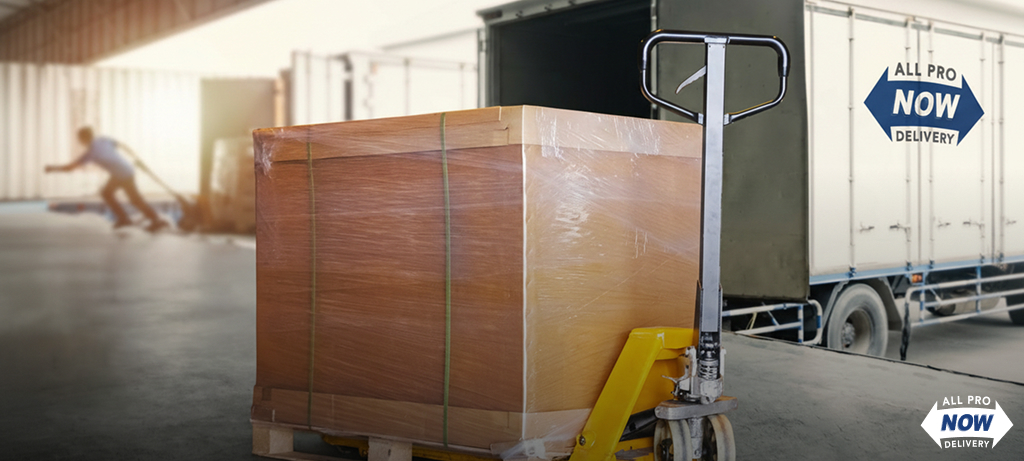
Freight also provides better handling for extremely heavy items. Palletized shipments experience less damage than individual packages bouncing through a parcel network.
Use Regional Carriers
National carriers charge premium rates for oversized items. Regional carriers serving specific corridors—like Texas to Florida or California to Arizona—often offer competitive pricing for large shipments.
AllProNow’s network includes logistics professionals across the Sun Belt who specialize in regional oversized shipping at rates below national averages.
Negotiate Volume Discounts
If you regularly ship oversized items, don’t accept retail rates. Carriers offer significant discounts to businesses with consistent shipping volume.
Third-party logistics providers and shipping brokers often have negotiated rates available to their customers. This access alone can offset any service fees.
Common Oversized Shipping Mistakes to Avoid
Experience teaches hard lessons. Learn from others’ mistakes instead.
- Underestimating dimensions: Always measure the packed box, not the item inside. Packaging adds inches that push you into higher rate tiers.
- Using weak packaging: Reused boxes save money upfront but cost more when items arrive damaged. Replacement shipping and customer refunds add up fast.
- Skipping insurance: Large items often carry significant value. Carrier liability limits rarely cover full replacement costs.
- Ignoring delivery requirements: Residential deliveries of oversized items may require appointments, liftgate service, or inside delivery. Failing to arrange these creates failed delivery attempts and extra charges.
- Missing cutoff times: Oversized packages often have earlier pickup deadlines than standard parcels. Late arrivals at the carrier facility may miss departing trucks.
When to Use a Third-Party Logistics Provider
Managing oversized shipping in-house makes sense for occasional shipments. Regular oversized freight creates a different calculation.
Third-party logistics providers (3PLs) specialize in the complexities that trip up casual shippers. They maintain carrier relationships, understand rate structures, and handle documentation that would otherwise consume your time.
Consider a 3PL when you ship oversized items weekly, deal with multiple carriers, need to reach destinations across different regions, or lack the staff to manage logistics full-time.
Through AllProNow, businesses in Dallas, Charlotte, Phoenix, Jacksonville, and across the country connect with experienced freight handlers who solve oversized shipping challenges daily.
Oversized Shipping for Different Industries
Industry-specific requirements affect how you approach large shipments.
Construction and manufacturing: Equipment, machinery, and building materials often exceed standard shipping limits. Flatbed trucks and specialized rigging become necessary for items like generators, HVAC units, or steel beams.
Retail and e-commerce: Furniture, appliances, and fitness equipment require white-glove delivery options. Customers expect in-home placement, not curb drop-offs.
Healthcare: Medical equipment demands careful handling and often time-sensitive delivery. Compliance documentation adds another layer of complexity.
Events and entertainment: Stage equipment, displays, and promotional materials travel on tight schedules. Late delivery means missed events with no second chances.
Your Oversized Shipping Checklist
Before sending your next large shipment, verify you’ve covered these essentials:
- Accurate measurements recorded (length, width, height)
- Actual weight and dimensional weight calculated
- New, weight-rated packaging selected
- Multiple carrier quotes compared
- Required labels and documentation prepared
- Insurance coverage appropriate for item value
- Delivery requirements confirmed with recipient
- Pickup or drop-off scheduled within cutoff windows
Start Your Oversized Shipping Project Today
Oversized shipping doesn’t have to mean oversized headaches. With proper planning, accurate measurements, and the right carrier selection, you can move large items efficiently across any distance.
AllProNow connects you with vetted logistics professionals throughout Texas, Florida, California, Georgia, North Carolina, Arizona, and beyond. Whether you need a single oversized shipment handled or ongoing freight management, our network has the expertise to get it done.
Ready to simplify your next oversized shipping project? Visit AllProNow.net to connect with qualified freight handlers in your area today.