Your customer clicks “buy.” The order ships. Then comes the hardest part.
Last mile delivery the final leg of the shipping process that moves a package from a distribution hub to the customer’s door accounts for over 53% of total shipping costs. It’s the single most expensive step in the entire supply chain, and it’s also where customer satisfaction is won or lost.
For businesses across Ohio, Michigan, Indiana, Pennsylvania, Kentucky, and Florida, this challenge is real. Whether you’re a Cleveland manufacturer needing urgent parts delivery or a Columbus retailer shipping same-day orders, the last mile often determines whether your business thrives or struggles with costly delays. Understanding how it worksand how to optimize itcan transform your bottom line.
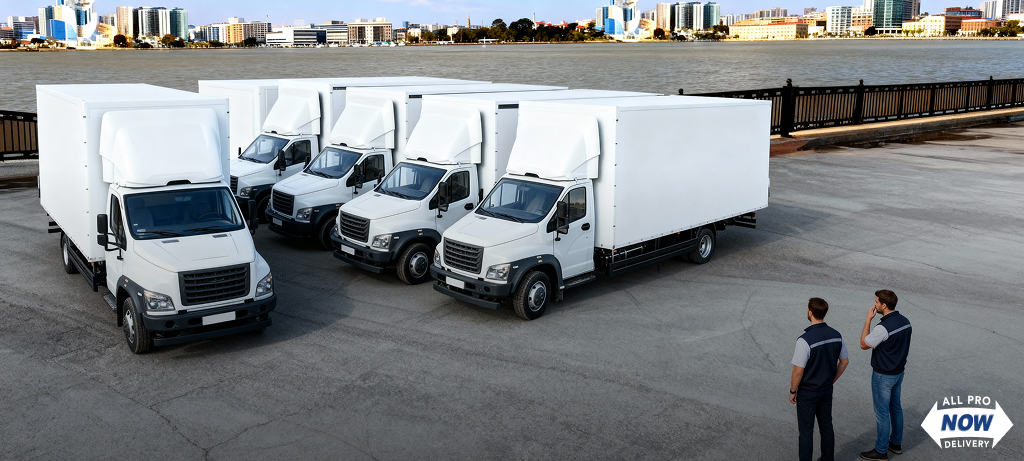
The Last Mile Isn’t What You Think It Is
The term “last mile” is misleading. It isn’t literally one mile. A last mile delivery can range from a few city blocks in dense urban areas to 50 miles or more in rural regions. The defining characteristic isn’t distance it’s that final individual delivery to each customer.
Here’s how the process typically unfolds. When a customer completes a purchase online or by phone, their order gets pulled from a fulfillment center or local hub. A delivery driver receives an optimized route loaded with multiple stops. The driver then navigates to each address, parks, delivers the package, and obtains proof of delivery through a photo, signature, or digital confirmation. It’s a process that seems simple on the surface but involves countless moving parts.
The real challenge becomes clear when you consider what’s happening on the ground. A single delivery truck in Detroit might make 80 or more stops in a single day. Each stop requires the driver to get out, navigate to the right location, confirm someone is home, and ensure the package reaches the right hands. Each minute of each stop translates directly into cost.
Why Last Mile Costs Dominate Your Shipping Budget
Most businesses spend approximately $10.10 per order on last mile delivery alone. For an online brand, that’s roughly 28% of your bottom line dedicated purely to getting products those final few miles. These numbers don’t improve by accident.
Three interconnected factors drive these astronomical costs. Stop-and-start inefficiency is the first culprit. Delivery vehicles spend far more time parked than actually moving. In cities like Cleveland or Pittsburgh, traffic congestion can add hours to routes. In rural areas of Indiana or Kentucky, drivers face the opposite problem—they travel long distances between sparse delivery points, with empty stretches of highway between stops.
Failed delivery attempts compound the problem significantly. When nobody is home, when an address is wrong, or when a package gets returned, each failed attempt can double or even triple the delivery cost. Studies have shown that profit margins can drop 26% over three years when last mile delivery isn’t optimized. That’s not a minor inconvenience—that’s margin erosion at scale.
The third factor is customer expectation. Amazon trained an entire generation of consumers to expect two-day or even same-day shipping as standard. Meeting that standard requires either massive infrastructure investment or strategic partnerships with regional carriers. There’s no middle ground customers have reset their baseline, and businesses that can’t meet it lose orders to competitors who can.
The good news? Technology and smart logistics partnerships are fundamentally changing the equation for businesses willing to adapt.
Customers Now Demand Real-Time Visibility
Modern customers don’t just want packages delivered. They want to know exactly where their package is at every moment, and they’re willing to take their business elsewhere if they don’t get that visibility.
A ProShip study found that 97% of customers expect real-time order tracking. Even more telling, another study revealed that 47% of customers won’t order again from brands lacking tracking visibility. That’s nearly half of your potential repeat customers walking away because they can’t see where their package is.
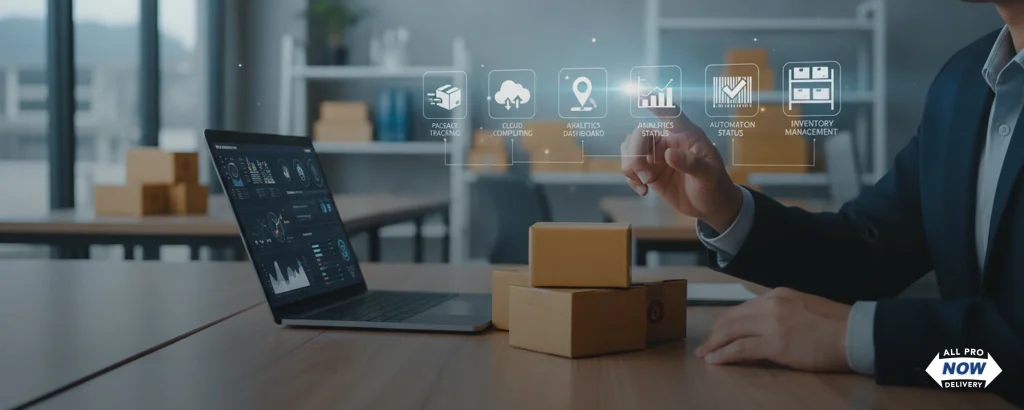
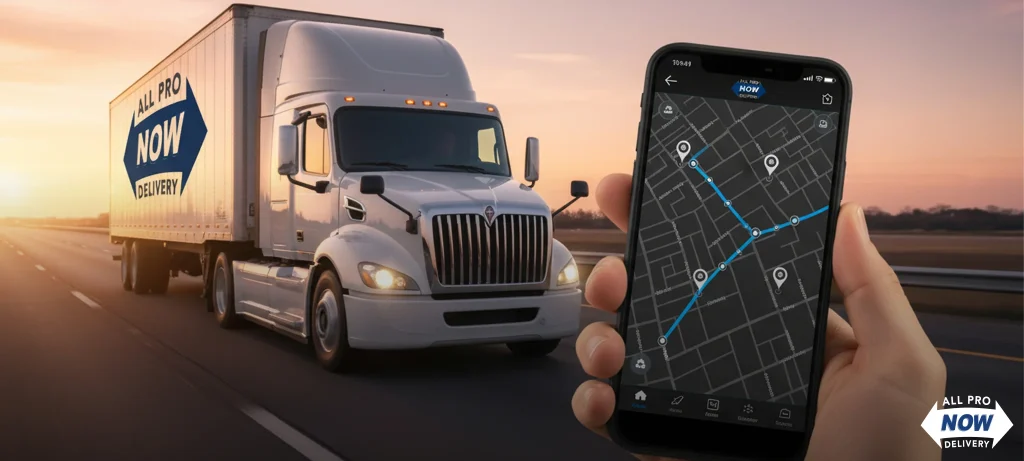
Effective last mile tracking needs to include GPS location of the delivery vehicle, estimated time of arrival (ETA) updates, notifications when the driver is approaching, proof of delivery with photos and signatures, and exception alerts if delays occur. For businesses in Toledo, Akron, or Youngstown, tracking capabilities become the difference between professional delivery services and unreliable alternatives that lose customers.
When a customer in Canton can watch their package move across town in real time, trust builds. They feel informed and in control. When packages disappear into a tracking black hole, customers disappear too. It’s that straightforward.
Different Industries Face Different Last Mile Challenges
The last mile looks entirely different depending on what industry you’re in, and a solution optimized for one type of business might fail for another.
Retailers and e-commerce sellers in Columbus or Florida live in a world of speed and volume. Online customers expect purchases delivered within days—sometimes hours. The challenge is the brutal mathematics: balancing speed with cost when you’re shipping individual items to scattered addresses across a region or nation. Every penny in shipping expense is a penny that comes out of your margin.
Manufacturers face a completely different equation. A machine shop in Northeast Ohio waiting for a critical part can’t absorb delays. When a part doesn’t arrive on time, production lines stop. Workers idle. One late delivery cascades into thousands of dollars in lost productivity and opportunity cost. These businesses need expedited delivery options with guaranteed delivery windows, not just “it’ll get there eventually.”
Medical and healthcare providers operate in an entirely different risk environment. Lab samples, medical equipment, and pharmaceuticals require careful handling and extremely tight timing. A hospital in Pittsburgh needs supplies delivered intact and on schedule with zero margin for error. The consequences of failure are measured in patient outcomes, not just customer satisfaction.
Construction companies must deal with the physical realities of their industry. Building materials don’t fit in standard delivery trucks. Oversized freight needs specialized vehicles and often requires appointment scheduling to coordinate job site drop-offs when personnel are available.
Legal services operate on strict timelines. Court filings have deadlines that don’t bend. Contracts need signatures from specific people. Law firms depend on secure, documented delivery with absolute proof that time-sensitive documents reached their destination intact. A package that arrives a day late can mean a missed legal deadline and potential liability.
Each industry requires different vehicles, handling procedures, delivery timeframes, and accountability measures. Generic shipping solutions rarely fit more than one of these categories well.
How the Major Carriers Approach Last Mile
The largest carriers—FedEx, UPS, and USPS—each approach last mile delivery through completely different strategies shaped by their infrastructure.
USPS operates on a fundamental advantage: they run local routes to every address in America every single day. This existing infrastructure makes incremental package delivery remarkably cost-effective. They’ve built a network that can’t be replicated. UPS and FedEx, recognizing this advantage, often hand off packages to USPS for final delivery, especially in residential areas where USPS economics make sense.
FedEx and UPS have invested heavily in technology infrastructure and regional hub networks to reduce transit times. They’ve launched services like UPS My Choice and FedEx Delivery Manager specifically to give customers more control over delivery timing and location. These services represent an acknowledgment that customers want agency in their delivery experience.
Regional carriers fill gaps that national carriers can’t efficiently serve. In Ohio, Michigan, and surrounding states, local delivery companies often provide faster, more flexible service than national carriers for same-day or time-sensitive shipments. They lack the coast-to-coast infrastructure, but that’s actually an advantage when you need local speed.
The trend in 2025 is clear: businesses are moving away from one-size-fits-all solutions. Smart shippers now compare rates and capabilities across carriers for every single shipment, then choose based on speed, cost, and reliability for that specific delivery situation.
Same-Day Delivery: When It’s Possible and When It’s Not
Same-day delivery has shifted from luxury service to baseline customer expectation. In 2025, over 20% of purchases happen online, and customers increasingly demand delivery within hours, not days.
Whether same-day shipping is actually possible depends on two factors. First, your fulfillment location matters enormously. Products must ship from somewhere close to the customer. A business in Cleveland can realistically offer same-day delivery throughout Northeast Ohio because the distance is manageable and regional carriers can cover the territory efficiently. But shipping same-day from California to Ohio? That’s impossible without expensive air freight that destroys your margin.
Second, last mile speed becomes the limiting factor. Ground shipping only works for fast delivery when your starting point is nearby. This is why distributed inventory has become so important in modern e-commerce. Companies that can store products in multiple regional locations can reach more customers quickly. It’s the difference between competing effectively and being locked out of markets.
For businesses serving Ohio, Michigan, Indiana, Pennsylvania, Kentucky, and Florida, regional last mile partners enable same-day delivery that national carriers simply can’t match because they don’t have the same geographic focus.
The Problems Every Business Encounters (And How to Solve Them)
Every business that ships products has encountered these recurring headaches. Understanding them and knowing how to address them can save significant time and money.
Packages delivered to wrong addresses happen more often than businesses want to admit. Some carriers leave packages in bushes, on sidewalks, or at neighboring homes, creating customer service nightmares. The solution is straightforward: work exclusively with carriers that provide photo confirmation and GPS-verified delivery locations. You can’t afford the customer friction and potential returns that come from wrong-address deliveries.
No visibility after handoff creates a different problem. Your order ships, then disappears into a complete tracking void until it arrives—or doesn’t. Customers have no way to know where their package is, and you have no way to proactively address delays. The fix is to choose delivery partners with real-time tracking that customers can access directly through their own accounts or through communications from you.
Unpredictable delivery windows frustrate everyone. “Your package will arrive sometime between 8 AM and 8 PM” isn’t helpful to anyone. It doesn’t tell the customer when to expect someone, and it doesn’t tell your customer service team when to expect support inquiries. Carriers with modern route optimization technology provide much tighter delivery windows and genuinely accurate ETAs. This single improvement can reduce customer service volume significantly.
High costs eating into margins is perhaps the most painful problem for growing businesses. Shipping expenses climb while customers increasingly expect free delivery. Regional carriers often provide substantially better rates than national carriers for local deliveries because they don’t maintain nationwide infrastructure costs. The solution is to compare quotes from multiple carriers and batch shipments when possible to gain volume discounts.
Failed first delivery attempts create a terrible scenario. When nobody is home, the driver leaves a note and the package requires a return trip—or the customer must make inconvenient arrangements. This doubles costs for a single delivery. The fix is to offer customers delivery scheduling options and alternative drop-off locations like garages, porches, or even neighbor delivery. Giving customers control reduces failed attempts dramatically.
Technology Is Fundamentally Reshaping Last Mile Delivery
The logistics industry has transformed over the past several years through technology adoption, and carriers who’ve embraced these tools operate on a completely different level than those still using outdated methods.
Route optimization algorithms represent a massive leap forward. These systems calculate the most efficient path through dozens of stops, accounting for traffic patterns, delivery time windows, and vehicle capacity. Drivers complete substantially more deliveries in less time because they’re following optimized routes instead of arbitrary ones.
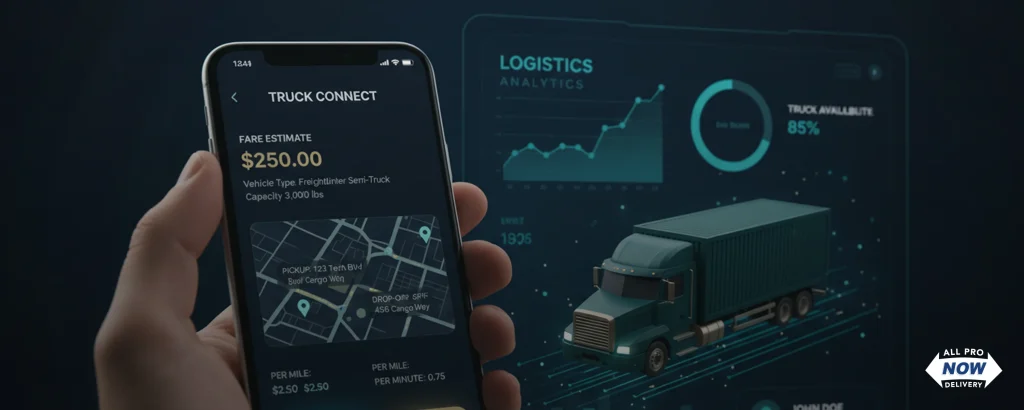
Real-time GPS tracking lets dispatchers see every vehicle and lets customers track their packages live. Problems get spotted and solved before they escalate into full crises. You know if a truck is running behind schedule and can notify customers proactively instead of dealing with angry inquiry calls later.
Digital proof of delivery—photos, signatures, and timestamps—creates accountability that changes the entire relationship between carrier and shipper. Disputes about whether packages actually arrived become rare because there’s documentation. This alone reduces customer service headaches and protects businesses from bogus claims.
Automated dispatch systems eliminate manual scheduling entirely. When orders enter the system, software instantly matches them with available drivers and vehicles. No phone calls. No manual spreadsheets. No human error in assignment.
Customer communication automation keeps customers informed about delivery status at every step, reducing “where’s my package?” support calls significantly. Customers get texts and emails proactively, which changes their perception from uncertainty to being kept in the loop.
For businesses in Akron, Canton, Detroit, or anywhere in the Midwest and beyond, technology-enabled last mile delivery has become the baseline expectation—not a premium feature worth paying extra for.
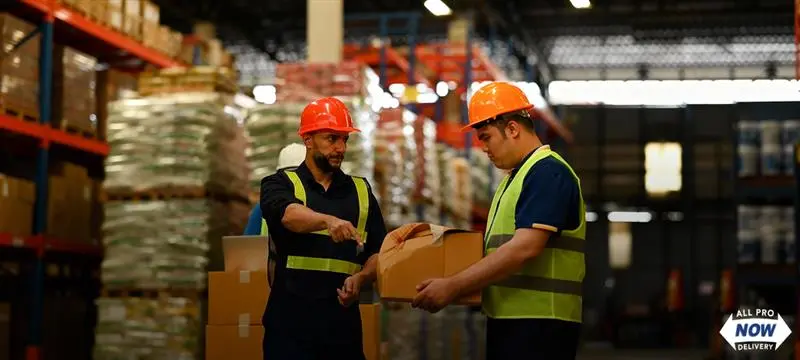
Choosing a Last Mile Partner That Actually Fits Your Business
Not all delivery services work equally well for all businesses. Your choice of partner matters enormously, and it’s worth spending time to evaluate options properly.
- Coverage area is the starting point. Does the carrier actually serve all of your customers’ locations? A business shipping throughout Ohio, Michigan, and surrounding states needs a partner with genuine regional presence, not just a hub in one city. Coverage gaps mean you’ll end up using multiple carriers or accepting slower service in underserved areas.
- Speed options matter more than most businesses realize. Can the carrier handle same-day, next-day, and scheduled deliveries with equal competence? Different orders have different urgency requirements, and you need a partner flexible enough to handle your mix.
Beyond these core criteria, vehicle variety prevents you from forcing square packages into round holes. Parcels fit in cars. LTL freight needs box trucks. Oversized materials require flatbeds. Your carrier should match vehicle type to shipment type and cost the service appropriately for each.
Pricing transparency is non-negotiable. Hidden fees kill margins silently. Look for carriers who provide upfront quotes with fuel surcharges and accessorials included so you know the true cost before committing.
Technology should be standard across the board. Real-time tracking, digital proof of delivery, and customer notifications shouldn’t be premium features—they should be included. If a carrier treats these as add-ons, they’re behind the curve.
Customer service ultimately determines whether problems get solved or fester. When something goes wrong—and something always goes wrong eventually—can you reach a human who actually solves problems, or do you get trapped in automated systems?
Why Regional Carriers Often Outperform National Giants
This might sound counterintuitive, but for local and regional delivery, dedicated regional partners frequently outperform FedEx and UPS. This isn’t because those companies aren’t excellent—they’re industry-leading. It’s because they’re optimized for something different.
National carriers excel at moving packages across the country in bulk. It’s what their infrastructure is built for. For local and regional delivery, that infrastructure becomes overhead rather than advantage. Regional carriers specialize in their territory. A local driver knows that the loading dock entrance is around back and that afternoon traffic on I-480 requires an earlier departure. This knowledge compounds over time.
Flexibility becomes a real differentiator too. Need a rush delivery at 4 PM? National carriers have fixed cutoff times built into their systems. Regional partners can often accommodate urgent requests because they’re not constrained by nationwide routing algorithms.
Cost naturally works in the regional carrier’s favor. Without a coast-to-coast infrastructure to maintain, regional carriers frequently offer better rates for local deliveries. You’re not paying for capacity they don’t use on your shipment.
Service quality improves at smaller carriers because they build relationships. Your delivery isn’t ticket number 847,293 in an anonymous system. It’s a priority with a person attached to it. When problems occur, someone knows your account and your business.
For manufacturers in Westlake, retailers in Columbus, or medical facilities in Pittsburgh, regional last mile delivery often provides demonstrably better outcomes than forcing every shipment through FedEx or UPS.
Starting Your Last Mile Improvement Journey
Improving your last mile delivery doesn’t require overhauling your entire supply chain or disrupting your existing operations. You can start small and build from there.
Begin by auditing your current costs. What are you actually spending per delivery when you calculate it precisely? Many businesses have never done this calculation, which means they have no baseline for improvement. You can’t manage what you don’t measure.
Next, map your customers geographically. Where do most of your orders actually ship? If you discover that 70% of orders go to Ohio and 20% to Michigan, concentrated areas become candidates for regional partner optimization.
Test alternatives before making any commitments. Ship identical orders through different carriers over a period of weeks and compare speed, cost, and reliability head-to-head. Real data beats assumptions every time.
Invest in tracking if you haven’t already. If customers can’t see where their package is, you’ll spend time answering questions instead of growing your business. The cost of tracking is trivial compared to the customer service cost of invisibility.
Finally, consider partnerships seriously. The right last mile partner handles logistics so you can focus on your actual business—making products, serving customers, growing revenue. Outsourcing delivery to experts often improves outcomes and reduces your operational complexity.
Your Last Mile Delivery Solution Starts Here
Understanding what last mile delivery is and why it matters is the first step. Actually solving it for your business is the next step, and it’s not as complicated as it seems.
Whether you’re a retailer in Cleveland needing same-day residential delivery, a manufacturer in Toledo with time-critical parts shipments, or a healthcare provider in Florida requiring careful handling and guaranteed timing—the last mile determines your customer experience. It determines whether customers return or take their business elsewhere.
The carrier and strategy you choose should address your specific challenges with technology, transparency, and actual accountability. Your delivery partner shouldn’t be a vendor you barely interact with. They should be a strategic extension of your customer service operation.
Ready to improve your delivery operations? The time to evaluate alternatives is now, before another quarter of overpriced, inefficient shipping drains your margins. Good last mile delivery is possible. It just requires intentional choice.