Running a small trucking company means juggling more than just trucks and loads. Every day involves assigning jobs, coordinating drivers, responding to customer calls, handling delays, and making sure nothing slips through the cracks. For many small fleets, dispatch still runs on spreadsheets, phone calls, and text messages. That setup works for a while, until volume increases or schedules change unexpectedly.
Dispatch software for small trucking companies exists to bring structure to this daily chaos. It helps owners and dispatchers manage operations without constantly reacting to problems. Instead of chasing updates or relying on memory, dispatch becomes centralized, visible, and far easier to control.
Many of these challenges are tied to broader logistics trends, as small trucking companies are expected to handle more volume, tighter delivery windows, and higher customer expectations.
Most small trucking businesses don’t struggle because they lack work. They struggle because their dispatch process can’t keep up with the pace of operations.
When Manual Dispatch Starts Holding the Business Back
In the early stages, dispatch is informal. The owner knows every driver. Routes are familiar. Changes are handled with quick phone calls. As soon as the business grows, this approach begins to break down.
What usually fails first isn’t speed, but coordination:
- Drivers miss updates when instructions change mid-route
- Dispatchers spend hours repeating the same information
- Jobs overlap because schedules live in different places
- Customers ask for updates that no one can confidently provide
Dispatch software for small trucking companies fixes this by putting jobs, drivers, and routes into one shared system. Instead of relying on constant follow-ups, dispatchers can see exactly what’s happening across the fleet in real time. That visibility removes a major source of daily operational stress.
Why Visibility Matters More Than Moving Faster
Many small trucking companies believe efficiency comes from moving faster. In reality, most losses come from not knowing what’s happening while work is in progress.
Without visibility, dispatchers can’t see which trucks are available, which jobs are running late, or where bottlenecks are forming. Decisions are made based on assumptions. That leads to unnecessary miles, idle drivers, and missed delivery windows.
Dispatch software for small trucking companies changes this by showing active jobs as they happen. Dispatchers don’t need to guess. Owners don’t need to wait for end-of-day reports. When something starts to go wrong, teams can respond early instead of explaining problems after the fact.
Visibility turns dispatch from a reactive task into a controlled process.
How Dispatch Software Changes the Day-to-Day Work
The difference dispatch software makes shows up most clearly during a normal workday. Instead of starting the morning with uncertainty, dispatchers begin with a plan.
A typical day looks different in a few important ways:
- Jobs are assigned digitally before drivers start moving
- Drivers see routes and instructions without repeated calls
- Dispatchers track progress without chasing updates
- Delays appear early instead of after schedules collapse
As trucks move, drivers update job status directly from the field. Dispatchers see progress without interrupting drivers. When changes happen, the system reflects them immediately, allowing adjustments without confusion.
Dispatch software for small trucking companies also simplifies end-of-day work. Completed jobs are already recorded. There’s no need to reconstruct routes, verify deliveries, or reconcile notes manually. That consistency saves hours every week.
Making Life Easier for Drivers Without Micromanaging Them
Drivers are often skeptical of new dispatch systems. Many expect extra steps, more monitoring, or more pressure. In practice, good dispatch software reduces friction rather than creating it.
Drivers no longer need to call dispatch repeatedly for updates. Job details are clear. Status updates are simple. Fewer interruptions mean drivers can focus on driving instead of managing communication.
Dispatch software for small trucking companies works best when it supports drivers instead of policing them. When drivers realize the system cuts down on calls and confusion, adoption becomes much easier.
Why Growth Gets Stuck Without Better Dispatch
Manual dispatch limits growth in ways that aren’t always obvious. Each new truck adds coordination overhead. Each new customer increases communication load. Eventually, everything depends on one person knowing what’s happening.
Dispatch software for small trucking companies removes this bottleneck. Dispatchers can manage more trucks without working longer hours. Owners can add capacity without immediately hiring more administrative staff.
This ability to grow without chaos is one of the strongest reasons small fleets move away from manual dispatch.
Improving Customer Trust Through Better Communication
Customers don’t expect perfection, but they do expect clarity. They want accurate delivery windows and timely updates when plans change.
Dispatch software makes this easier by providing real-time job status. When customers call, dispatchers can answer with confidence. When delays occur, teams can communicate early instead of reacting late.
Dispatch software for small trucking companies improves customer experience not by moving trucks faster, but by improving reliability and communication.
Dispatch Software Beyond Trucking Alone
While dispatch software is essential for trucking operations, its value extends to other job-based businesses. Companies involved in warehousing,last-mile delivery, construction hauling, and field services face similar coordination challenges.
Dispatch software for small trucking companies often supports mixed operations where vehicles, drivers, and jobs intersect. That flexibility matters for businesses that don’t fit neatly into one category.
How AllProNow Supports Small Trucking Dispatch
AllProNow is built for operationally heavy businesses that need structure without unnecessary complexity. For small trucking companies, it supports dispatch in a way that mirrors real workflows.
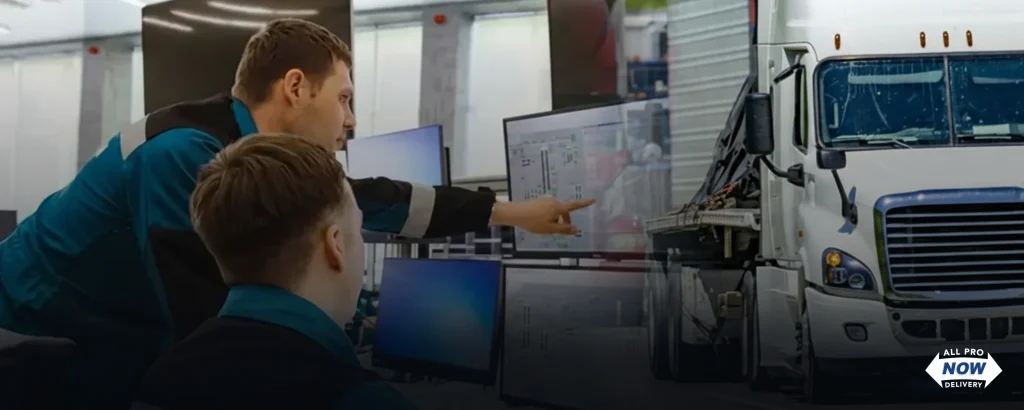
AllProNow allows dispatchers to assign jobs, manage routes, coordinate drivers, and track execution from one system. Drivers receive clear instructions and update job status from the field. Dispatch teams gain visibility without constant follow-ups.
The platform also supports fleet management, job tracking, and operational reporting, helping teams understand how work actually gets done each day. AllProNow fits into existing operations without forcing businesses to change everything overnight.
Moving From Manual Dispatch to a Structured System
Switching to dispatch software often reveals problems that manual systems hide. Routes that seemed fine turn out to be a waste time. Driver utilization gaps become obvious. Communication delays show up clearly.
Dispatch software for small trucking companies turns these insights into improvements. Better sequencing reduces fuel costs. Improved job queuing increases productive driver hours. Automated tracking reduces disputes and missed updates.
Most small fleets transition gradually. Running old and new systems in parallel for a short period allows teams to adjust without disruption. Once the benefits become clear, manual dispatch quickly feels unnecessary.
Turning Daily Execution Into Better Decisions
Over time, dispatch software builds a reliable record of operations. Owners can review on-time performance, driver utilization, and route efficiency without digging through spreadsheets.
Dispatch software for small trucking companies turns daily execution into insight. Instead of guessing where money is lost, teams can see it clearly. That makes planning, pricing, and growth decisions more confident and less risky.